Isola: The Milan Neighbourhood That Changed the City
A working-class district turned design capital Isola in the last fifteen years has become the most interesting place to spend an evening in Milan.
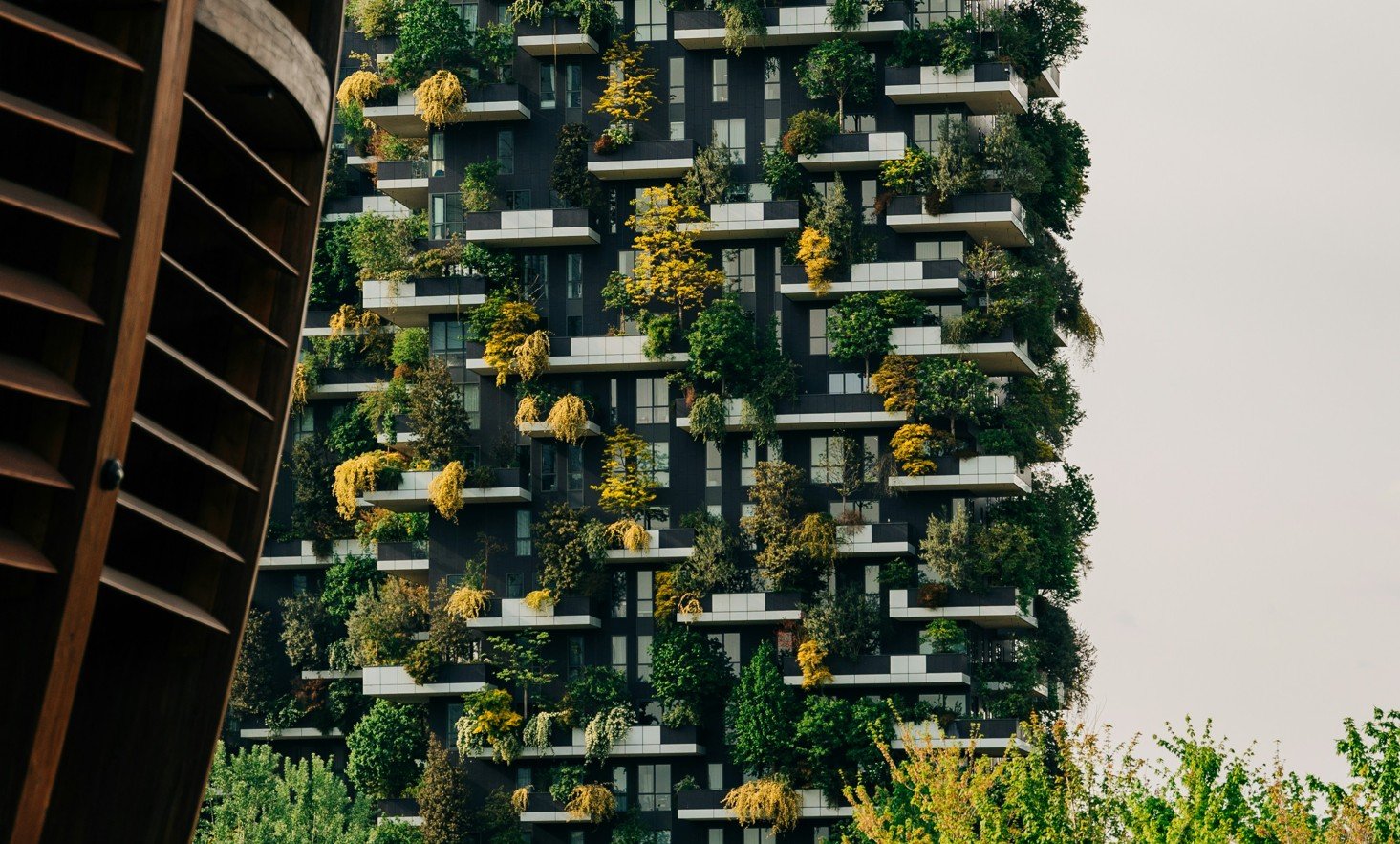
The Bosco Verticale the two vertical-forest towers that anchor Porta Nuova, immediately south of the Isola neighbourhood.
For most of the 20th century, Isola meaning “island” in Italian was one of Milan’s most ignored neighbourhoods. The name came from its physical isolation: hemmed in on three sides by railway lines, with a single bridge connecting it to the rest of the city. It was a place of railway workers, immigrants from southern Italy, small repair shops and family-run trattorias that closed by ten. Milan’s centre of gravity was always further south around the Duomo, La Scala, the Brera district. The wealthy parts of the city did not look toward Isola, and Isola did not particularly want them to.
Between 2010 and 2020, this changed completely. The construction of the new Porta Nuova district immediately south of Isola a development that includes the Bosco Verticale (Vertical Forest) towers, the UniCredit Tower (Italy’s tallest building) and a new urban park, the Biblioteca degli Alberi — pulled the cultural energy of central Milan northward, and Isola found itself adjacent to one of the most photographed pieces of contemporary urbanism in Europe. Property prices doubled. The trattorias gained sushi neighbours. The bridge over the railway became one of the busiest pedestrian crossings in the city.
What makes Isola interesting in 2026 is that the transformation is not complete. The neighbourhood is still itself still residential, still affordable in places, still home to families who have lived there for three generations but it is also now Milan’s most genuinely interesting district for an evening out. It is the kind of neighbourhood that London had in the 1990s and Berlin had in the 2000s, caught in the middle of a change that is not yet finished.
The transformation, in one walk
The clearest way to understand Isola is to walk across it, from south to north, in about forty minutes.
Start: Piazza Gae Aulenti
Begin at Piazza Gae Aulenti, the elevated circular plaza at the heart of the Porta Nuova development. The square — named after the great Italian designer Gae Aulenti, who designed the Musée d’Orsay’s interior — is surrounded by the new towers: the UniCredit complex on one side, the Solaria towers on another, and immediately to the north, the Bosco Verticale. The Bosco Verticale is the most famous of Milan’s new buildings: two residential towers with 800 trees and 20,000 shrubs growing on their balconies, a deliberate experiment in vertical urban forestation that has been imitated worldwide since the towers were completed in 2014.
From here, the entrance to Isola is straight ahead — across a bridge, past a glass pavilion, into the neighbourhood.
The transition
Walk north along Via Confalonieri for two blocks. The transition is immediate and slightly jarring. On the south side you see the gleaming glass of the new towers; on the north, six-storey 1920s apartment buildings, faded yellow stucco, hand-painted shop signs, laundry hanging from upper windows. The contrast is the point. Isola is exactly this: old Milan with new Milan pressed against its southern edge.
The piazza
About five minutes in, you reach Piazza Tito Minniti — the small triangular square that has been the social centre of Isola since the 19th century. The buildings around it are residential, with ground-floor cafés and shops. The bar on the corner — Cantine Isola, opened in 1896 — is the oldest wine bar in the neighbourhood, still run by the same family, and remains a place where elderly residents go for an aperitivo on Tuesday afternoons. €4 for a glass of Italian wine and access to one of the most extensive small Italian wine lists outside Tuscany.
Stecca degli Artigiani
Two minutes further north, on Via Garibaldi, you reach a long red-brick warehouse that runs along the railway tracks. This is the Stecca degli Artigiani — the “Artisans’ Stick”, a 19th-century industrial building that has been preserved and converted into ateliers for artists, designers, ceramicists and small craft workshops. It is open to the public, free, and many of the studios sell their work directly. Saturday afternoons are best.
Mercato Comunale di Isola
Continue north and you reach the neighbourhood’s covered market, a modest 1930s structure with about twenty stalls. Mornings only (closes by 14:00). The cheese stall (Latteria del Mercato) and the butcher (Macelleria Sirtori) are both family operations of multiple decades. Buy something for lunch and walk it out to the small park behind the building.
Via Thaon di Revel and Via Pastrengo
The northern part of Isola is its newest. Both Via Thaon di Revel and Via Pastrengo have, in the past ten years, filled with small design shops, independent bookstores, vintage clothing dealers, sourdough bakeries, ramen counters and a high concentration of well-reviewed restaurants. This is the part of Isola that international magazines write about. It is also the most expensive — but lunch under €20 is still possible if you choose carefully.
Where to eat
Isola has more interesting restaurants per square kilometre than any other neighbourhood in Milan. A selection:
- Berberè (Via Sebenico, 21) — sourdough pizza, organic flour, one of the best pizzerias in northern Italy; €12–18 per pizza
- Trattoria Stella (Via Pasquale Sottocorno, north end) — a traditional Lombard trattoria, family-run, unchanged since the 1970s; €30 for a full meal with wine
- 28 Posti (Via Corsico, technically Navigli but Milan’s most influential modern restaurant; the chef trained at Isola spots first) — for tasting menus
- Ratanà (Via de Castillia, 28) — modern Milanese cuisine in an Art Nouveau building; one Michelin star; €70+ tasting menu
- Pavé (Via Felice Casati but with an Isola branch) — bakery and breakfast; the cornetti are the best in the area
- Frida (Via Pollaiuolo, 3) — an aperitivo institution; €10 for a spritz with extensive buffet, every evening 18:00–22:00
A typical Isola evening: aperitivo at Frida at 19:00, dinner at Berberè or Stella at 21:00, drinks afterwards at Cantine Isola or one of the wine bars on Via Pastrengo until 23:30.
The bigger picture: why this matters for travellers
Milan has a reputation problem with tourists. Most first-time visitors arrive expecting Rome or Florence — historic centre, Renaissance churches, narrow medieval streets — and find instead a working business city with one famous cathedral, one famous opera house and a famous shopping district. They spend two days, see the Duomo and Da Vinci’s Last Supper, and leave slightly disappointed.
This is because they are looking at Milan the wrong way. Milan is not a city of medieval monuments. It is a city of neighbourhoods, each with a distinct character and a separate identity. The historic centre is the smallest and least interesting of them. To understand Milan, you need to spend an evening in Brera (the old artists’ quarter), an afternoon in Navigli (the canal-side district), a morning at the Cimitero Monumentale (an open-air sculpture museum disguised as a cemetery) and an evening in Isola.
Of these four, Isola is the one that shows you Milan as it is right now — not the Milan of the Renaissance or the Milan of postwar industry, but the Milan of 2026. A neighbourhood that has been completely transformed by a small group of architects and entrepreneurs in the past decade and a half, and that is still continuing to change. This is the Milan that will define what kind of city it becomes by 2040. Walking it now is, in a sense, walking the future.
Practical information
| Nearest metro | Gioia or Garibaldi FS (line M2) for the south; Isola (line M5) for the centre of the neighbourhood |
| Best day | Saturday — the market is open and the streets are full |
| Best evening | Thursday — aperitivo culture at full strength, but less crowded than weekend |
| Time needed | A full afternoon and evening |
| Budget for an evening | €40–70 per person (aperitivo + dinner + drinks) |
| Best photography | Bosco Verticale at golden hour from the bridge on Via Confalonieri |
What to combine it with
Isola pairs naturally with:
- Bosco Verticale and Piazza Gae Aulenti — immediately south; spend an hour
- Biblioteca degli Alberi park — the new urban park between Isola and central Milan
- Cimitero Monumentale — a 15-minute walk west; one of the most extraordinary cemeteries in Europe, with monumental tombs and sculptures from the 19th and 20th centuries
- Brera — historic art district, 20 minutes south on foot
For more on Milan’s other neighbourhoods, see our complete Milan guide.
One final note
Isola is changing, fast. The shop on the corner that has been there since 1972 may not be there in 2028. The trattoria run by the same family since 1956 is up for sale. The neighbourhood is in the middle of becoming something else — and the next stage of its life will not include all of what makes it interesting right now. If you are in Milan, walk it this year. The version of Isola you find now will not be the same in five.
Read next:
Categories: Practical · Tags: Milan, Isola, Neighbourhood, Design, Architecture