A Night at the Casino de Monte-Carlo: What Actually Happens Inside
One of the most photographed casinos in the world is also the most misunderstood. Here is what to expect if you spend an evening at the Casino de Monte-Carlo — gambling optional.
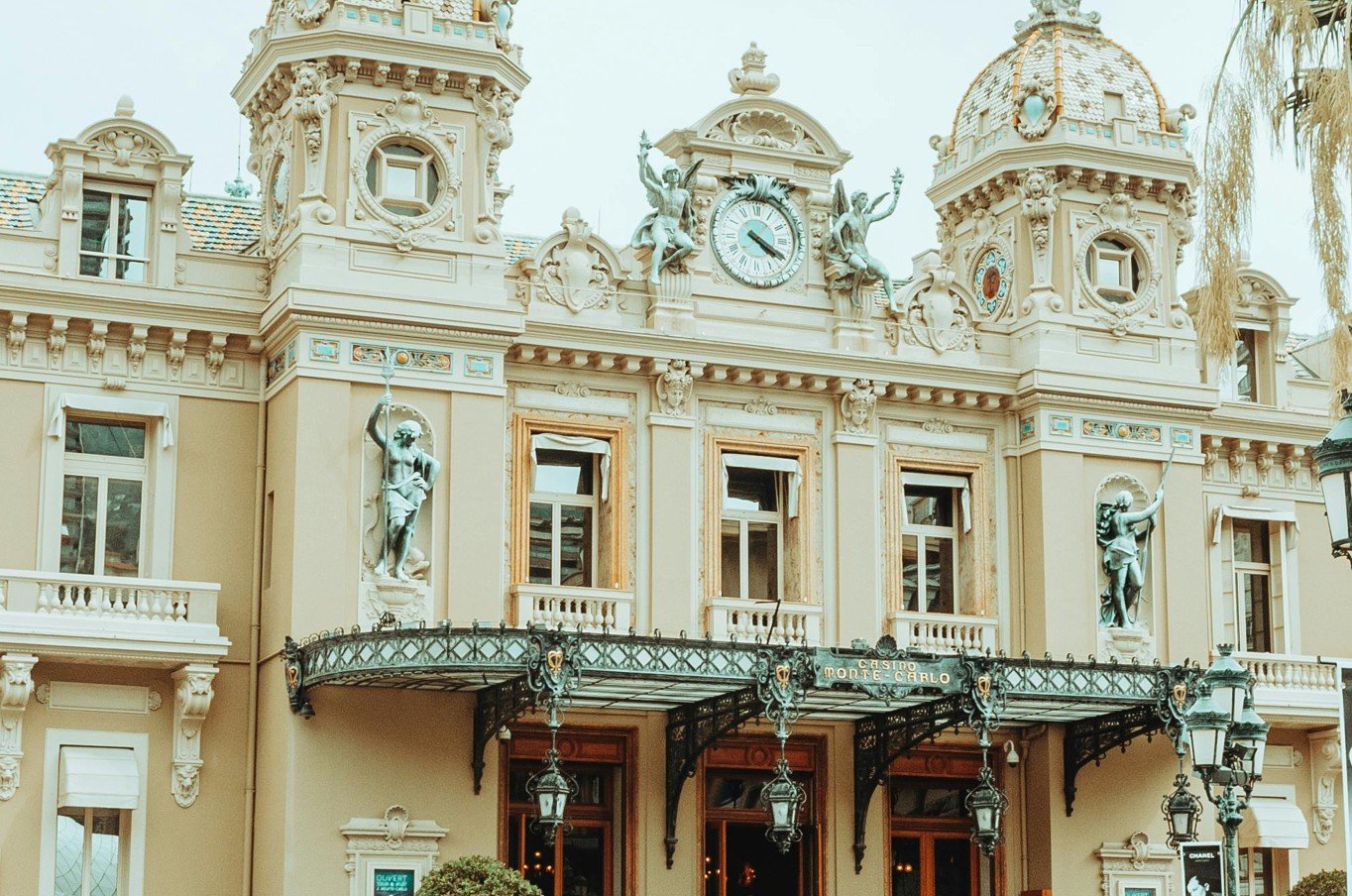
The Belle Époque façade of the Casino de Monte-Carlo, designed by Charles Garnier — the same architect responsible for the Paris Opera.
The Casino de Monte-Carlo is one of those buildings that everyone has seen and almost no one has been inside. Its façade gold-trimmed limestone, Belle Époque sculpture, the famous square with its fountain and rows of supercars — appears in James Bond films, on perfume advertisements and in the opening sequences of European travel programmes. The interior, by contrast, is rarely shown. There is a reason for that: photography is forbidden inside, the dress code is enforced, and the building does not particularly want to be famous in the way that the Bellagio in Las Vegas is famous.
This makes the casino interesting in a way that few other casinos in the world are. It is not a tourist attraction in the sense of Disneyland. It is a working casino, in the original 19th-century European sense — a place where gambling exists inside a building deliberately constructed to make the gambling feel civilised. It is also one of the most beautiful interiors in Europe, and it is open to anyone over 18 with appropriate dress.
This guide explains what actually happens when you walk through the door.
The building and its history
Monaco was, in the 1850s, one of the poorest principalities in Europe. The ruling Grimaldi family had lost most of their landholdings to France earlier in the century, the population had fallen below 1,000, and the country survived on a small income from olive oil and lemon production. The decision to build a casino in 1856 was an explicit attempt to save the economy. The decision was controversial, succeeded beyond all expectation and made Monaco one of the wealthiest places per capita on earth.
The current casino building dates from 1878 and was designed by Charles Garnier — the same architect who designed the Paris Opera. The two buildings share many features: the same elaborate Beaux-Arts façade, the same gilded sculptural details, the same theatrical foyer with a grand staircase. The casino, like the opera, was conceived as a piece of social architecture — a place to be seen as much as a place to gamble.
Inside, the building unfolds across a series of progressively grander rooms: the entrance foyer, the Atrium, the Salon Renaissance, the famous Salon Europe (with its 28-arm Bohemian chandelier), the Salon Médecin (with high gambling stakes), and beyond these, the Salons Privés — the private rooms reserved for high-stakes players and serious gamblers, which require a separate, more expensive entrance.
What you need to know before going
Entry
The casino is open to anyone over 18 — except residents of Monaco, who are prohibited from gambling there by a law dating from 1856 (designed to ensure that gambling losses came from foreigners). You must present a passport or national ID at the door. The minimum age is strictly enforced.
Dress code
The Monte-Carlo dress code is one of the strictest of any casino in the world.
- Daytime (before 14:00): Smart casual. No shorts, no flip-flops, no sportswear. Men can wear jeans with a smart shirt; women have considerable flexibility.
- After 14:00: A jacket is required for men. No jeans in the main gambling rooms. No sneakers.
- Salons Privés: A jacket and a collared shirt at minimum. A tie is recommended, particularly after 22:00.
The casino keeps loaner jackets at the door for visitors who arrive underdressed. Sneakers, shorts and sportswear cannot be remedied — you will be turned away. This is not negotiable. The casino has been enforcing this code for 150 years.
Cost of entry
There are three levels of access:
- Tour ticket (€17, daytime only): Allows you to walk through the public rooms without playing. Daily 09:00–13:00.
- Main gambling rooms (€17 entry): Includes access to the slot machines and the standard table games (roulette, blackjack, punto banco). After 14:00.
- Salons Privés (€10 additional): The private rooms with higher stakes and more exclusive atmosphere.
The €17 entry fee is the most modest investment you can make in seeing the interior of one of Europe’s great Belle Époque buildings. It is recouped in the time you spend walking through the public rooms before you even consider placing a bet.
The interior, room by room
The Atrium
The first space you enter, with its marble columns, gilded ceiling and grand staircase. The casino’s reputation as an architectural masterpiece is established within the first thirty seconds. Photography is permitted here only.
The Salon Renaissance
A medium-sized hall with frescoed ceilings and ornate wood panelling. The first slot machines appear here, but they sit in a room that looks like the drawing room of a French château. This contrast — old building, modern gambling — is the defining feature of Monte-Carlo.
The Salon Europe
The most spectacular room in the casino, and one of the most photographed interiors in Europe (in the rare cases photography is allowed during private tours). The 28-arm Bohemian crystal chandelier weighs over 4 tonnes. The walls are gilded; the ceiling features frescoes by Jules-Élie Delaunay. The room currently houses traditional European roulette tables.
The Salon Médecin
Named after Henri Médecin, a casino director from the early 20th century. This is the room where the more serious gambling takes place — higher minimums, lower lighting, more concentrated atmosphere. Blackjack and chemin de fer are played here in the evenings.
The Salons Privés
Beyond a separate entrance, the private rooms host the casino’s highest-stakes play. Minimum bets at the chemin de fer table start at €500. The atmosphere is dramatic and quiet. Most visitors will not enter these rooms, but the additional €10 entry fee is worth it just to see them.
What to do if you don’t want to gamble
You do not have to play to enjoy a night at the Casino de Monte-Carlo. A common approach for visitors:
- 21:00 — Arrive in evening dress. Pay the €17 entry. Walk slowly through the rooms.
- 21:30 — Go to the bar. The casino’s main bar, in the Salle Garnier, serves the same drinks at the same prices as a good hotel bar — €18–25 for a cocktail. Sit, observe, listen.
- 22:00 — Stand near a roulette table. Watch a few rounds without playing. The rhythm is hypnotic.
- 22:30 — Place one bet. Roulette, €10 minimum, on a single colour. Win or lose, you have now participated.
- 23:00 — Leave through the front, where the supercars and the fountain make for a final photograph.
Total cost: €40–60. The evening is one of the most distinctive social experiences available in any European city.
What to wear, in detail
The casino is a place where appropriate dress is rewarded with respect from the staff and an experience that feels genuine. Some practical notes:
- Men: A dark suit, jacket and trousers, leather shoes. A tie is not required but is appropriate. Hat off indoors.
- Women: A cocktail dress, elegant trousers and blouse, or a tailored skirt. Heels are common but not required. The dress code is enforced less strictly for women — there is more flexibility — but the spirit is the same.
- Don’t: Wear sneakers (of any kind), shorts, sportswear, branded T-shirts, baseball caps, beachwear or sandals.
If in doubt: dress as you would for a wedding at a smart venue.
Practical information
| Address | Place du Casino, 98000 Monaco |
| How to arrive | Train from Nice in 25 minutes (€4.50 each way); car deposited at the casino’s free valet |
| Opening hours | Visits 09:00–13:00 · Gambling rooms 14:00–04:00 |
| Best evening | Thursday — full activity, less weekend crowd |
| Worst evening | Saturday — full and slower service |
| Minimum bet (roulette) | €10 in main rooms, €25 in Salons Privés |
| Drinks at the bar | €18–25 for cocktails; €12 for a glass of wine |
| ID required | Passport or national ID |
Dinner before the casino
The traditional Monte-Carlo evening sequence is: dinner at one of the restaurants of the Hôtel de Paris (directly across the square), then a slow walk to the casino, then drinks at the bar inside the casino.
- Le Louis XV — Alain Ducasse’s three-Michelin-star restaurant, inside the Hôtel de Paris. Tasting menus from €350 per person.
- Le Grill — on the roof of the same hotel, with a retractable roof that opens to the stars. €120–180 per person.
- Café de Paris — directly opposite the casino on the square; the brasserie option, with a famous terrace. €60–90 per person.
For other Monaco dining options, see our complete Monaco guide.
The bigger picture
The Casino de Monte-Carlo is not the largest casino in the world, the wealthiest or the most lucrative. The Las Vegas Strip outearns Monte-Carlo by orders of magnitude. Macau’s casinos handle more cash in a single evening than Monte-Carlo does in a year. But neither Las Vegas nor Macau offers what Monte-Carlo offers: the feeling of being inside an architectural masterpiece, designed by the architect of the Paris Opera, where every detail of the room contributes to a 150-year tradition of polite, formal, theatrical play. It is a casino as a piece of European cultural heritage — and one of the few places on the continent where a single €17 ticket grants access to all of it.
If you spend an evening there, the rooms stay with you longer than the result of any bet you place.
Read next:
- The complete Monaco travel guide — restaurants, tips and getting around
- Le Train Bleu: Dining inside one of Europe’s most beautiful railway stations
- Jardins de Laribal: Barcelona’s secret hillside garden
Categories: Practical · Tags: Monaco, Casino, Monte-Carlo, Belle Époque, Evening