Maxwell Food Centre: Where Singapore’s Best Chefs Eat Lunch
Forget the Michelin guide. The most influential restaurant district in Singapore is a covered hawker centre in Chinatown where lunch costs five dollars.
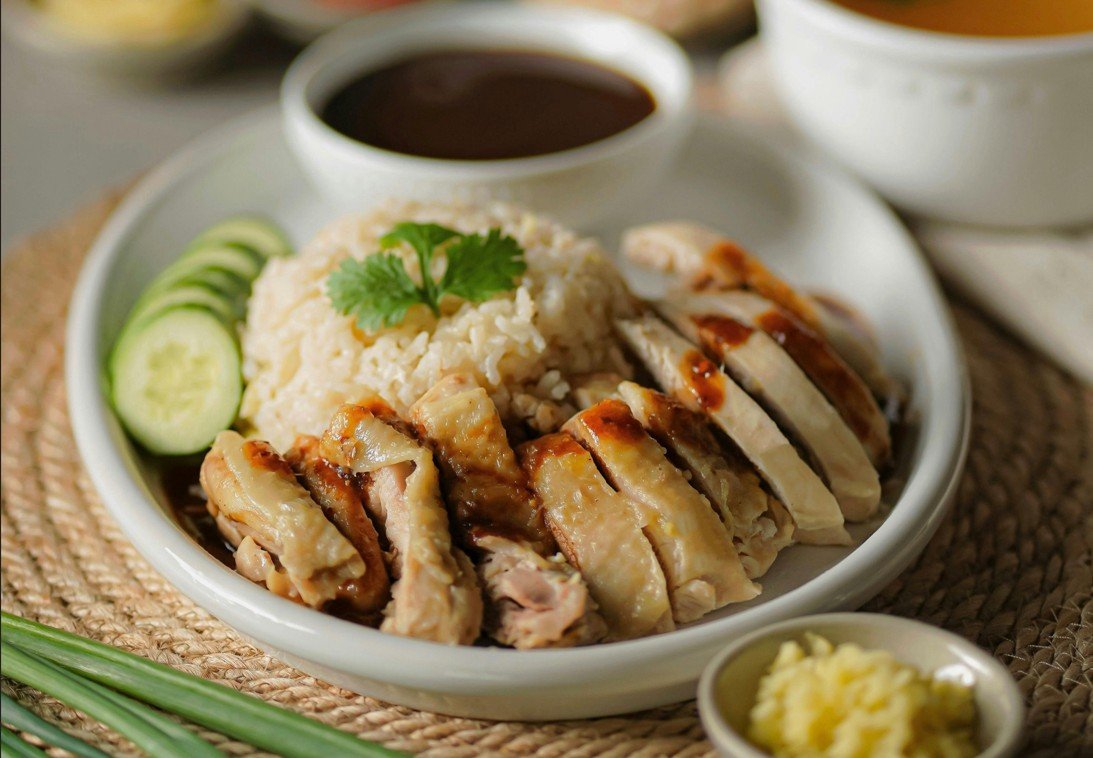
Hainanese chicken rice the dish that made Maxwell Food Centre famous, and one of the best meals in Singapore for under five dollars.
Visitors to Singapore are usually shocked by two things. The first is how expensive everything is. The second is how cheap, and how good, the food is provided you know where to eat. The reconciliation of these two facts is the story of Singapore’s hawker centres, an institution so important to the country’s identity that UNESCO inscribed “hawker culture” on its Intangible Cultural Heritage list in 2020.
There are over a hundred hawker centres in Singapore. They range from small neighbourhood food halls with twenty stalls to vast structures with two hundred. Some are tourist-oriented; most are not. The standard rises and falls with the district. There is a single hawker centre, however, that consistently appears at the top of every list of Singapore’s best the one where the country’s most acclaimed chefs are known to eat on their days off, the one travel writers describe as “the perfect introduction to Singaporean food”, the one that has held its standard for over five decades. It is called Maxwell Food Centre. It is in Chinatown. And it is the single best meal a visitor to Singapore can have for under ten dollars.
What a hawker centre actually is
The hawker centre is Singapore’s solution to a problem most countries never solved: how do you feed an entire city, every day, with food cooked to a high standard, by hand, at a price ordinary people can afford?
The system works like this. A hawker centre is a covered public structure — usually a single open-sided hall — containing dozens of food stalls, each operated independently by a small team (usually one to three cooks) specialising in a single dish or a small family of dishes. The stalls cook to order. The food is sold at a price set by what the market will bear, usually between SGD $3 and $8 per dish. Diners buy from one or several stalls and eat at communal tables in the centre of the hall. The hall is government-built, government-maintained and rented to operators at subsidised rates. The result is that an excellent meal — soup with hand-pulled noodles, chicken steamed in coconut rice, slow-braised pork ribs — costs less in a hawker centre than a coffee does in most Western capitals.
Two hawker centres in Singapore have, between them, won three Michelin stars. The combined cost of all three star-winning dishes Hawker Chan’s soya sauce chicken rice, Tai Hwa pork noodle soup and Liao Fan’s chicken is under SGD $20. Nowhere else in the world has Michelin-rated food at this price point.
Maxwell, in particular
Maxwell Food Centre sits on the edge of Chinatown, on the corner of Maxwell Road and South Bridge Road. The building opened in 1986 in its current form, but the market on the site dates back to the 1930s, and several of the current stalls are direct continuations of family businesses that have been cooking on or near the site for three generations.
The building is unromantic: a low concrete structure with a corrugated metal roof, open to the air on all sides, with rotating ceiling fans, plastic chairs, communal tables and the smell of charcoal smoke, garlic and pandan leaf at every hour of the day. It holds approximately 100 stalls and 350 seats. At lunchtime it fills almost completely; the queue for some stalls reaches across the centre and out the door.
What distinguishes Maxwell from the other major centres — Lau Pa Sat, Tiong Bahru, Old Airport Road, Tekka — is the consistency of its standout stalls. There are perhaps twelve places in the centre where the queue would be justified in any city in the world. Singaporean food writers tend to agree on roughly the same shortlist; below is that shortlist, in the order most chefs would recommend you eat through them.
The seven stalls to know
1. Tian Tian Hainanese Chicken Rice (Stall 10)
The most famous stall in the building, and probably the most famous chicken rice stall in Singapore. Anthony Bourdain ate here three times on camera and called it the best chicken rice he had ever had. The dish — a half-chicken poached in stock, served on top of rice cooked in the same stock with ginger and pandan, accompanied by three small sauces (chilli, ginger, dark soy) — costs SGD $5 for the small portion. The queue at noon is regularly thirty people deep. Worth it. Closed Mondays.
2. Hum Jin Pang (Stall 76)
A traditional Chinese fried dough — flat, slightly sweet, fried to order in a small wok — that is one of the rarer remaining hawker preparations. A pack of six pieces for SGD $3. Best as a breakfast or afternoon snack.
3. China Street Fritters (Stall 64)
The famous ngoh hiang stall — pork and prawn stuffed inside beancurd skin, deep-fried until crisp, sliced and served with a sweet sauce. SGD $5 for a generous portion. Family business since 1934.
4. Marina South Delicious Food (Stall 13)
The famous chwee kueh: small steamed rice cakes topped with chopped preserved radish and chilli. A breakfast dish, traditional and increasingly rare. SGD $3 for a plate of six.
5. Zhen Zhen Porridge (Stall 54)
The best Cantonese-style rice porridge in the centre. The fish porridge, with a poached egg, is the order. SGD $5. Opens early (06:00) and is most famous as a breakfast or late-night meal.
6. Lao Ban Soya Beancurd (Stall 91)
A famous soya milk pudding stall — silky, lightly sweetened soya beancurd served in small bowls, optionally with brown sugar or palm sugar syrup. SGD $2.50. The dessert order.
7. Maxwell Fuzhou Oyster Cake (Stall 5)
One of the last stalls in Singapore making the traditional Fuzhou oyster cake — a thin batter filled with minced pork and small oysters, deep-fried in a special cup-shaped mould. SGD $2.50 each. A snack rather than a meal.
How to actually eat here
The hawker system has its own etiquette and a few rules that, if observed, will earn you the respect of every neighbour at your table.
- Reserve a table first using a tissue packet (chope). The standard Singaporean way to claim a table is to place a small pack of tissues (or a folded umbrella, or a phone — but tissues are traditional) on a chair. Then you go to order. The packet of tissues means the table is taken. Locals respect this.
- Order in person, queue separately at each stall. If you want chicken rice, oyster cake and beancurd, you queue at each stall in turn. There is no central counter.
- Pay cash. Most stalls now accept PayLah and NETS, but many still accept only cash. Carry small bills.
- Self-serve and self-clean. You carry your food back to your table. You return your tray to the marked station when you finish.
- Eat fast — and don’t apologise for it. Hawker food is meant to be eaten while it is hot. Long, leisurely meals are not part of the tradition.
The ideal Maxwell visit
- Arrive at 11:30 AM — just before the lunch peak; most stalls have just refreshed their cooking pots and queues are still short.
- Reserve a table with a tissue packet.
- Start with chicken rice from Tian Tian — the standard against which all chicken rice is measured.
- Add a serving of ngoh hiang from China Street Fritters — pork-and-prawn rolls, sliced.
- Finish with Lao Ban Soya Beancurd — the dessert that closes most Maxwell visits.
- Total cost: SGD $12–14 for one person; $20–25 for two sharing.
Practical information
| Address | 1 Kadayanallur Street, Singapore 069184 |
| MRT | Chinatown (lines NE, DT) or Maxwell (TE) — 5-minute walk from either |
| Hours | Most stalls daily 08:00–22:00, but each stall sets its own schedule |
| Tian Tian Chicken Rice hours | Tue–Sun 10:00–19:30 · Closed Monday |
| Cost per meal | SGD $5–15 |
| Cards accepted | Some stalls — bring cash |
| Best time | 11:30 lunch or 18:00 dinner |
| Worst time | 12:30–13:30 — every queue at its peak |
What to combine it with
Maxwell sits on the edge of Chinatown, with several of Singapore’s important sights within ten minutes’ walk:
- Buddha Tooth Relic Temple — 5 minutes; free entry, an impressive multi-storey modern Buddhist temple
- Sri Mariamman Temple — Singapore’s oldest Hindu temple, 3 minutes from Maxwell
- Chinatown Heritage Centre — small but well-curated museum about the area’s history
- Telok Ayer Street — the original Singapore waterfront, now lined with cafés and historic shophouses
For more on Singapore’s other hawker centres and food districts, see our complete Singapore guide.
One last point about prices
Most Singaporeans are aware that hawker prices have risen substantially over the past decade — from SGD $3 for a basic meal in 2010 to SGD $5–6 today. This remains, by any international standard, remarkable value. A traveller from London or San Francisco will pay roughly one-quarter of what they pay at home for a meal of comparable craftsmanship. There are few cities left in the world where excellent food at low prices is still the rule rather than the exception. Singapore is one of them, and Maxwell is the proof.
Read next:
Categories: Food · Tags: Singapore, Hawker, Food, Chinatown, Street food