Wedding Cake Rock: The Sydney Coastal Walk Most Tourists Never Find
Forty minutes south of the city, an Instagram-famous white rock formation and one of the most spectacular coastal walks in Australia — accessible by ferry from Cronulla.
Sydney is famous for its harbour. Visitors come for the Opera House, the Harbour Bridge and the ferry rides that connect them. Most spend their time within a few kilometres of Circular Quay. A smaller proportion get to Bondi Beach. A much smaller proportion ever leave the city limits at all.
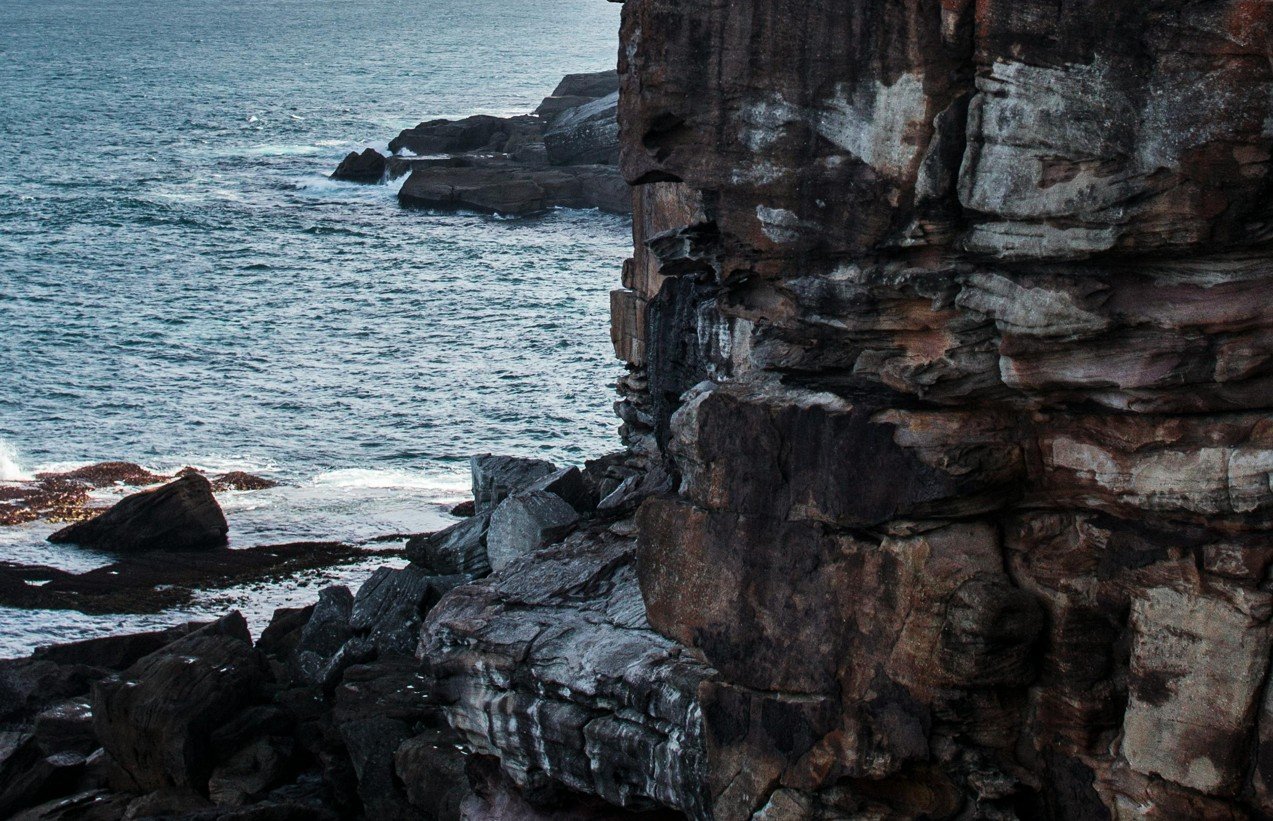
This is a mistake, because the most spectacular coastal landscape in eastern Australia begins exactly where the suburbs end. About forty kilometres south of central Sydney, the Royal National Park — the second-oldest national park in the world, established in 1879 — drops dramatically into the Pacific Ocean along thirty kilometres of cliffs, beaches, eucalyptus forests and sandstone formations that look as if they were carved by hand. And the easiest way to see the best of it, for visitors without a car, is a one-day walk from a small ferry-accessed village called Bundeena to a section of cliff topped by a 6-metre-high white sandstone outcrop known as Wedding Cake Rock.
The walk is six kilometres in each direction. It is one of the best things to do in Sydney that does not involve Sydney at all.
The geography
Royal National Park covers 151 square kilometres immediately south of the Sydney metropolitan area. Its eastern edge — the coastline — runs from Bundeena in the north to Otford in the south. The clifftop walk along this coastline, called the Royal Coast Track, is 26 kilometres long and is one of the great multi-day walks of New South Wales.
For day visitors, the most rewarding section is the first six kilometres from Bundeena. This stretch passes the most photographed feature of the park — Wedding Cake Rock — as well as a series of headlands, secluded beaches and Aboriginal rock engravings, before reaching a small beach called Marley, which is a good place to turn around.
The full out-and-back walk is 12 kilometres. Most walkers complete it in five to six hours including breaks and lunch.
Wedding Cake Rock itself
About 1.5 kilometres south of Bundeena, the cliff edge widens into a broad sandstone shelf. At the very edge of this shelf, separated from the rest of the cliff by erosion, sits a perfectly rectangular, brilliant white block of sandstone — about 6 metres tall, 3 metres wide and 4 metres deep — that looks exactly like a multi-tiered wedding cake. The whiteness comes from a mineral wash that distinguishes it from the surrounding orange-brown rock.
For most of its known history, hikers walked out onto Wedding Cake Rock for photographs. It became, around 2014–2015, one of the most-photographed natural features of New South Wales — particularly after a single photograph showing a figure standing on its edge with the ocean dropping straight down behind went viral across Instagram.
What followed was unfortunate but inevitable. Geological assessments in 2015 found that the rock is unstable. It is, structurally, separated from the cliff. It is expected — possibly within the next decade, possibly later — to fall into the ocean. In response, the New South Wales government built a substantial fence around it. You cannot legally walk onto the rock anymore. You can, however, photograph it from the safe side of the fence, where the visual still works: the white rectangular block at the edge of a sheer cliff, with the ocean stretching to the horizon.
This is, paradoxically, an improvement. Without people on top of it, the rock photographs more clearly as a piece of geology. The fence does not appear in most angles. The view is still spectacular.
The walk itself
The route from Bundeena to Marley Beach and back is straightforward, well-marked, and one of the most varied short walks within easy reach of any major Australian city.
Start: Bundeena ferry wharf
The Cronulla–Bundeena ferry — a wooden vessel from 1939, the oldest commuter ferry still in operation in Australia — runs hourly throughout the day from Cronulla wharf to Bundeena. The crossing takes 30 minutes. Cronulla itself is a 60-minute train ride from Sydney Central station. Total journey from central Sydney to Bundeena: about 90 minutes door to door.
Bundeena village
A small fishing village of about 2,000 residents, with a few cafés, a general store and a pub. Have breakfast or coffee here before starting the walk. The path begins at the southern edge of the village, signed “Coast Track”.
The first kilometre
The track passes through coastal heath — low shrubs, banksia trees, wildflowers in spring — and emerges onto the first headland. The Pacific Ocean appears immediately: a single horizon line, no land visible, the cliffs dropping 40 metres to the rocks below. The path is sandy in places and rocky in others. No technical climbing.
Aboriginal rock engravings
About 1 kilometre in, the path passes a flat sandstone shelf containing a set of Aboriginal rock engravings — outlines of fish, kangaroos and human figures, carved into the stone perhaps 1,000 years ago by the Dharawal people who lived along this coast for tens of thousands of years before European contact. The engravings are protected. Do not touch or walk directly on them.
Wedding Cake Rock
Approximately 1.5 kilometres from Bundeena. You will recognise it: a brilliant white cube at the edge of a cliff. The fenced viewing area allows close-up photography. Allow 20 minutes.
The middle stretch
From Wedding Cake Rock the path continues south, undulating along the cliff tops. There are several detours to small lookouts. About 3 kilometres in, the track descends to a tiny cove called Little Marley — a 50-metre beach almost always empty, where you can sit and have your packed lunch in the sand.
Marley Beach
One kilometre further, the path drops down to Marley Beach — a wider, equally empty beach surrounded by sandstone headlands. This is the turnaround point. Swimming here is not recommended (strong rip currents and no lifeguard) but the beach is beautiful and serves as a natural endpoint.
From here you walk the same path back to Bundeena.
What to bring
- Water — at least 1.5 litres per person. There is no water source on the track.
- Lunch and snacks — there are no facilities once you leave Bundeena. Pack a sandwich, fruit, energy bars.
- Sun protection — hat, sunscreen, sunglasses. The Australian sun is genuinely harsh; the cliffs offer no shade.
- Closed shoes with grip — most of the track is dirt and sandstone but some sections have loose rock.
- A swimsuit — if you want to swim at Little Marley (calmer waters) or at Bundeena beach on your return.
- Cash — for the ferry and the Bundeena pub. Card is accepted in most places but the ferry occasionally has card-reader issues.
When to go
| Best season | April–May and September–October — mild temperatures, wildflowers in spring |
| Avoid | December–February middays — Australian summer at 35 °C with no shade |
| Best day | Weekday — the path becomes busier on weekends, especially around Wedding Cake Rock |
| Worst day | Public holiday weekends — the ferry queues become long |
| First ferry | 09:00 from Cronulla — best for an early start |
| Last ferry back | 18:30 (check the current timetable — it changes seasonally) |
Total cost
- Train Sydney to Cronulla: A$5–7 each way (Opal card)
- Ferry Cronulla to Bundeena: A$8 each way
- Park entry: Free for pedestrians
- Lunch and snacks: A$20–35 per person
- Total for the day: A$45–60 per person
For visitors comparing this against Sydney’s commercial attractions, the value proposition is unbeatable.
What it offers that the city does not
Most visitors to Sydney leave having photographed the Opera House and the Harbour Bridge from twenty angles. They have eaten well, swum at Bondi and ridden a ferry across the harbour. These are good experiences and worth having.
What they have not done is seen Australia. Sydney is one of the great coastal cities of the world, but its real geographic context — the dramatic, raw, unforgiving Pacific coastline that defines the entire eastern side of the continent — is invisible from Circular Quay. To see it, you have to leave the city. The Bundeena walk is the easiest, fastest way to do that.
On a clear weekday in autumn, walking south along a cliff edge with no other human visible, watching humpback whales migrate north a few hundred metres offshore (May–November), it is hard to remember that you are within an hour of a city of five million people.
This is the Sydney that Sydney people know about. Our Sydney guide covers the rest.
Read next:
Categories: Itineraries · Tags: Sydney, Hiking, Coastal walks, Royal National Park, Day trips